Finding ways to distribute marketing budgets is an important priority for many marketers. When marketers are getting ready to run advertising campaigns, they must know where the best areas are to spend money and have the best return on investment possible. In order to come up with an efficient mix of marketing dollar disbursement, marketers put together different methods in order to obtain the absolute maximum effect. Marketers strive to spend the least amount of money possible in terms of advertising yet still reach a large audience. One technique which they use in order to reach this outcome is the brand development index, or BDI.
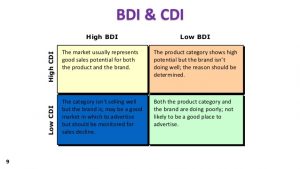
According to an article on Cleverism, the brand development index is used for identifying the relationship between the total sales of a brand in a particular market and the total population in the market. The article uses the Coca-Cola Company as an example, stating that to calculate the BDI for any particular region in the US, Coke must calculate its sales in that particular region as a percentage of its total sales in the US. This is then compared with the population of the region in question as a percentage of the total population of the US. The formula used is: BDI= [Brand sales to region / Population in region] / [Total brand sales + Total population]. As Informit better describes it, the BDI Is basically a measure of brand sales per person or per household within a specified demographic group, compared with its average sales per person or household in the market as a whole.
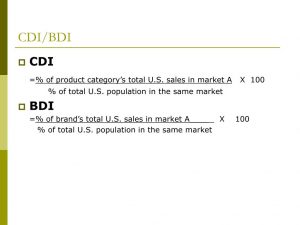 After attaining these calculations, brands can decide whether they want to spend more or less marketing dollars compared to what the market’s BDI is. More of the marketing budget can be spent on areas where the BDI is higher because more of a target audience can then be reached. BDI also tends to be used in conjunction with CDI or category development index. The CDI measures how strong sales are for certain product categories in specific markets and then compares it to the average performance of consumers everywhere. The formula used here is: CDI= [Category sales to group / Households in group] / [Total category sales / Total households]. The outcome allows marketers to pinpoint where the strong and weak segments are located for different service categories. Like the BDI, the CDI contributes by giving marketers important information so that they can better assign advertisements and disburse marketing budgets to certain areas. Informit describes the CDI as an index of how well a category performs within a given market segment, relative to its performance in the market as a whole.
Both the BDI and CDI tools are important for marketing initiatives and guide marketers in the right direction so that they know whether to pour their efforts into constructing a brand, or if the category is weak overall and efforts should focus on improving the category before focusing on the brand. These tools also enable marketers to find comparisons much faster and easier. Overall, both tools are extremely important in guiding marketers to put together financially sound marketing strategy plans.
 I recently began working for a marketing agency in the floral industry. Gems is a lifestyle company focused on creating demand for fresh cut flowers. The company’s goal is to change when and how people buy flowers. Gems’ flowers are grown in Colombia and are then distributed to supermarkets throughout the United States. Bouquets range from standard holidays arrangements and traditional daily bouquets to custom recipes created for smaller holidays like the Day of the Dead and Diwali. It is a wonderful company who describes itself as
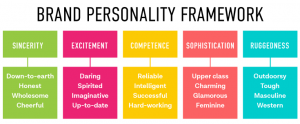
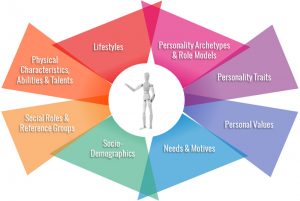
  Gems’ target audience is made up of grocery stores who want to offer a “different” type of bouquet to their customers. Gems is able to fulfill these requirements by offering distinctive yet personal bouquets. New recipes are put together according to what clients ask of our company. We completely tailor bouquets according to what supermarkets want to serve to the public. However, Gems pays attention to detail and does its best to ensure that each product is sophisticated and distinctive enough to differentiate us from other floral distributors. We try to be different in the types of bouquets that we offer and what holidays we offer them for, as well as adding very detailed final touches like sticker picks and custom sleeves in order to make the bouquet that much more special. These qualities not only contribute to the company’s claim of being remarkable but also fit into the brand personality Gems aims to achieve. Gems has worked to construct a brand that is sincere by building a personality that is transparent and thoughtful. It is ethical and has built customer trust along the years by taking customer expectations seriously and always delivering responsibly.
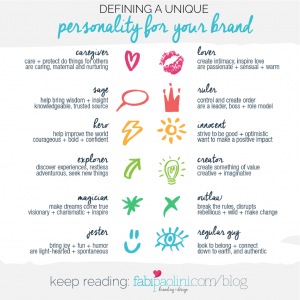 One of the reasons Gems has maintained such a successful brand personality and reputation is because they have maintained their personality through their actions. Gems is an honest brand that works to deliver products ethically and will correct issues that do not align with their brand personality. There are a couple of things that Gems can do however in order to liven up their brand personality in the digital age. In addition to the qualities mentioned above, Gems portrays a young and exciting brand image and I believe there is a lot more that the company can do in order to display this. For example, trendy and younger brands tend to be associated with social media and exciting posts. Gems should take advantage of this personality trait and use it to garner excitement among their followers. Additionally, Gems can be more consistent with press releases and the frequency of their posts. This would absolutely add a more personalized touch to their brand personality.
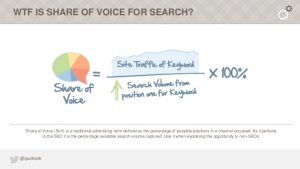 Share of voice can be measured for different channels such as social media and SEO and although the steps involved change slightly, the overall equation is fairly simple: Brand advertising / Total market advertising = Share of voice. It is crucial to be mindful of the amount of mentions made about your brand during a certain amount of time. Next it’s time to follow this process for your competitors, keeping track of all related keywords. By calculating the total amount of mentions and dividing it by 100, you can calculate what 1 percent of the total voice for your group is. You can then separate your brand’s total amount of mentions and divide it by whatever number was first calculated. This can be done repeatedly to calculate the total voice for each competitor.
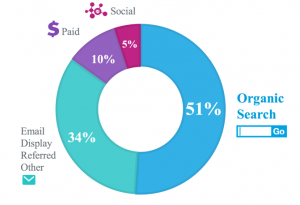 According to an article on share of voice by
 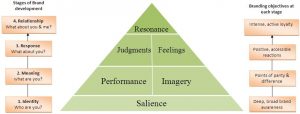 The most important part of creating brand resonance is to market products in such a way that owning said product helps consumers define a part of their social identity or who they are. You can see this in consumers who swear by MAC makeup, Apple lovers who only use mac computers and iPhones, and auto owners who refuse any cars that aren’t Mercedes. These consumers feel that certain brands in particular really help define a piece of who they are.
 resonance. Personal resonance has to do with self-connection and helping consumers find their voice to express identity and navigate life choices. Personal resonance also covers interdependency by facilitating habits, rituals, and routines (a Starbucks coffee every morning, for example). The article then mentions that the second route is cultural resonance which links brands to enduring values or epochs and role resonance which links brand to social roles (Birkenstock consumers are “tree-huggers). Finally, organizational resonance is the third route by making sure the brand fits with the business model and making sure there is shared understanding of the brand among employees.
 It is crucial for a brand to begin at the bottom of the brand resonance pyramid and strive to move up to the higher levels. However, few brands reach the very top. There are some steps brands can take in order to make the brand resonate with customers. By engaging with customers on an emotional level, learning about customers and their goals, targeting content for specific audience segments, and listening to customer feedback and adjusting accordingly, companies have a good shot at creating a brand that stands the test of time.
 Data science assists in pulling information from data and helping marketers choose the right insights that will allow them to optimize marketing strategies to the max and gain the most revenue they can. There are also many other ways that data science can be used in the marketing field, including SEO, content marketing, engagement, and marketing campaigns.
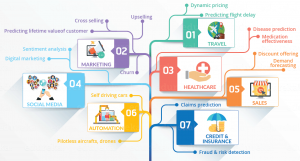 Data science is also beneficial when it comes to making data-driven decisions like targeting leads and lead scoring. For example, with analyzed data science in hand, marketers can target leads by looking at their history and determining what their online behavior is. This strategy can help marketers really get the most value out of their marketing efforts. Marketers can segment their customers according to behavior and consequently increase sales performance and revenue.
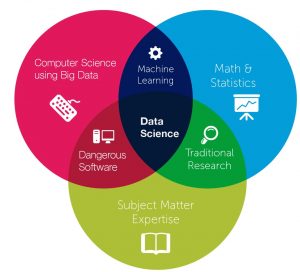 target audience. Marketers can also use data science to access information about customers to receive information and send ads to those customers specifically.
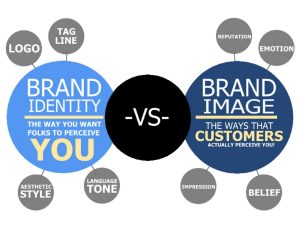 A brand isn’t just an image or a logo. The term is used loosely and so many consumers do not realize that there is so much more to a brand, including feelings and emotional relationships. A brand is a relationship and along with a brand comes brand image and brand identity—two pieces that are crucial to the brand’s success.
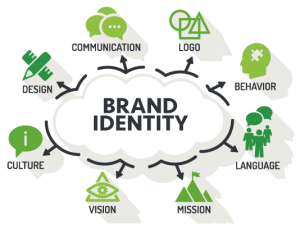 Brand image and brand identity are often times mistaken for one another because they are both related to branding, which includes assigning a name to products or services. However, both terms mean very different things. Brand identity relates to the way a brand is defined and the way the creator of the brand wants the public to view it while brand image refers to how the brand’s consumers perceive it.
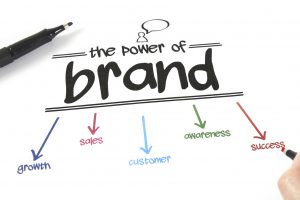 A brand’s identity focuses more on the way a company chooses to represent itself and the way the brand wants its audience to view it. Essentially, the brand identity should represent what the company looks like, stands for, and what is represents. Branding plays a crucial role in ensuring that an audience understands a company’s identity. A company’s consumers and competitors will distinguish products based on the way it markets itself and communicates its identity.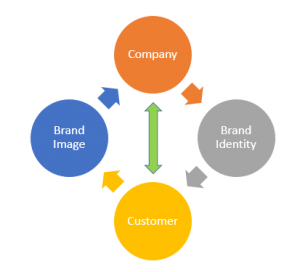
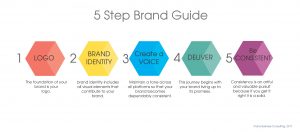 Building an effective brand image and brand identity makes it easier for consumers to connect with a brand and form a special relationship with it, which in turn builds customer loyalty. Both are critical for a brand to prosper. By understanding how both of each of these segments of branding feed into the creation of a brand and by carefully strategizing, a company can create something to be remembered by.